
Trucking Dispatcher: What They Do & How to Choose One
What does a trucking dispatcher actually do, what do they cost, and how do you pick a good one? The complete guide for owner-operators and small fleets.
TRUCKING INDUSTRYTRUCK DISPATCHERFLATBED DISPATCH SERVICETRUCK DISPATCH SERVICE
Five Star Dispatching
7/11/20265 min read
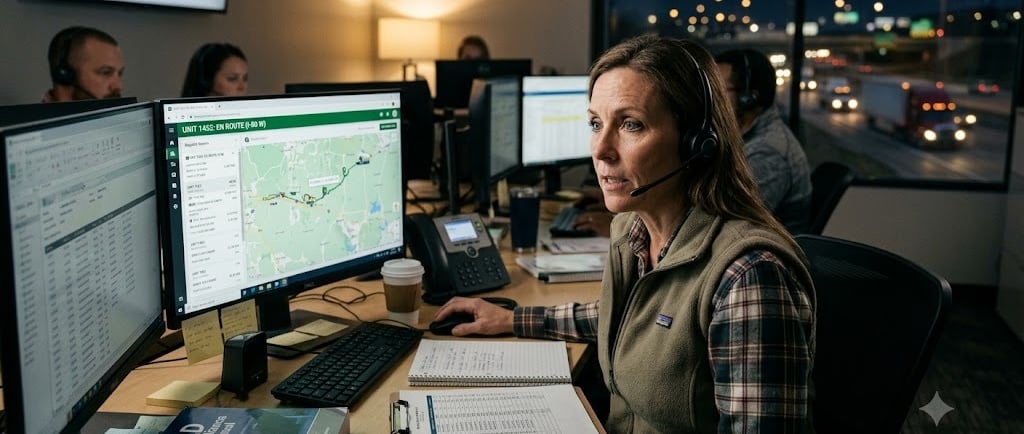
Trucking Dispatcher: What They Actually Do (And How to Pick a Good One)
Ask ten owner-operators what a trucking dispatcher does and you'll get ten answers. Some think it's a glorified load-board account. Some think it's a middleman taking a cut. Some think it's the reason they finally got their weekends back.
Only one of those is right — and the difference comes down to whether you hired a real dispatcher or a warm body forwarding you links.
Here's the straight explanation: what a trucking dispatcher is, what they actually do, what they cost, and how to tell the good ones from the expensive mistakes.
What Is a Trucking Dispatcher?
A trucking dispatcher is the person who keeps your truck loaded and your rates strong. They find freight, negotiate the rate, book the load, handle the paperwork, and line up what you're hauling next — so you can focus on driving.
Think of them as your back office, your negotiator, and your load-hunter rolled into one. You own the truck and the authority. They run the booking side of the business.
Two clarifications that trip people up:
"Freight dispatcher," "truck dispatcher," and "trucking dispatcher" all mean the same thing. The industry uses them interchangeably. Don't overthink the label — here's the full breakdown of the terms.
A dispatcher is not a freight broker. A broker is FMCSA-licensed and works for the shipper. A dispatcher works for you, the carrier, and negotiates against brokers to win you a better rate. Same freight, opposite sides of the table.
What a Trucking Dispatcher Actually Does
Strip away the marketing and the job comes down to six things:
Finds your loads — across load boards and, more importantly, a broker network most owner-operators never get access to alone.
Negotiates your rate — the posted rate is an opening offer. A good dispatcher counters on every load, and even $0.20/mile more adds up to thousands a year.
Books the freight and handles setups — carrier packets, broker onboarding, rate confirmations. The paperwork you shouldn't be doing at a truck stop at midnight.
Plans around deadhead — empty miles are pure loss. A dispatcher thinks in round trips, lining up your next load before you drop the current one.
Handles check calls and problems — when a shipper runs late or a load falls through, they fix it. You keep driving.
Vets the brokers — a great rate from a broker who doesn't pay is worthless. Credit checks happen before you roll, not after.
That's the job. If a service only does #1, you're paying for a search engine with a phone number.
Dispatcher vs. Doing It Yourself vs. Software
There are three honest ways to handle dispatching.
Do it yourself. Completely viable — plenty of owner-operators book their own freight well. But it means knowing your cost per mile cold, working the boards, building broker relationships, negotiating every load, and planning backhauls. Here's the full playbook if you want to run it yourself. The catch: that's a full-time job, and you already have one behind the wheel.
Buy dispatch software (a TMS). Software organizes the work — it doesn't do the work. It won't call brokers or negotiate your rate. Great for fleets that already employ a dispatcher; not a fix for a solo operator who wants to stop hunting loads. Software vs. service, compared honestly.
Hire a dispatch service. You hand the booking side to someone who does it full-time, and your authority stays in your hands. You trade a fee for higher rates, fewer empty miles, and your evenings back.
None is universally right. It depends on whether your time is worth more on the load board or on the road.
What Does a Trucking Dispatcher Cost?
Two common models:
Percentage of the load — typically single digits (commonly around 5–10%). You pay more when you earn more, which keeps your dispatcher motivated to book high.
Flat weekly fee — a fixed cost regardless of what you haul. Predictable, and it doesn't punish you for a big week.
Either way, get the real number up front, in writing. And judge it against what it earns back: a dispatcher who books you $0.25/mile higher and cuts 100 deadhead miles a week pays for themselves several times over. The fee isn't your expense — cheap freight and empty miles are.
How to Choose a Trucking Dispatcher (The Gut-Check)
Run every candidate through these five questions. The good ones answer without flinching:
Do I keep my own authority and the final say on every load? You should never surrender control of your business.
What's your average rate per mile in my lanes? A vague answer means weak negotiation. Numbers don't lie.
Who answers when I call — one person or a queue? A dedicated dispatcher who knows your truck beats a rotating call center every time.
Flat fee or percentage, and what's the real number? Know the math before you sign.
Do you specialize in my equipment? Generalists miss the best-paying niche freight.
Notice what's not on that list: location. Dispatching happens over phones, load boards, and broker relationships — not driveways. A great dispatcher two states away will out-earn a mediocre local one every week. More on why "near me" is the wrong filter.
Does Your Freight Type Change Things? Absolutely.
A dispatcher who treats every load the same is leaving your money on the table. Specialized freight has specialized economics:
Flatbed — tarp pay must be negotiated separately from the linehaul, and securement, permits, and commodity knowledge decide whether you capture the premium.
Power only — the profit lives in fast turns, detention pay, and fuel surcharge, not the per-mile rate.
Hotshot — lower overhead, but tight margins that punish deadhead and cheap freight harder than any other segment.
Reefer, dry van, and oversized each have their own rules too. Match your dispatcher to your equipment, not just to a price.
Why Owner-Operators Run With Five Star Dispatching
We're built for exactly this: owner-operators and small fleets who'd rather drive than dispatch.
You get one dedicated dispatcher who knows your truck, your lanes, and your limits by name — not a ticket number in a queue. We hunt the freight, fight for the rate, vet the brokers, handle the setups and paperwork, and plan around deadhead so your wheels keep turning. Dry van, reefer, flatbed, power-only, hotshot — nationwide. You keep your authority. You keep the final say on every load.
No cheap-freight quotas. No babysitting. Just a truck that stays moving and rates that hold up. Here's what separates a real dispatch service from the rest.
The Bottom Line
A trucking dispatcher isn't a middleman — done right, they're the reason your truck stays loaded at rates that actually pay. The good ones earn their fee several times over in better freight, fewer empty miles, and the hours you get back. The bad ones just forward you load links.
Now you know which questions separate the two.
Ready to stop hunting loads and start hauling them? 👉 Visit fivestardispatching.com and let's get your wheels turning.
Frequently Asked Questions
What is a trucking dispatcher?
A trucking dispatcher finds and books loads for a carrier, negotiates rates with brokers, handles paperwork and broker setups, plans routes to cut deadhead, and keeps the truck loaded — while the owner-operator keeps their authority and the final say on loads.
What's the difference between a trucking dispatcher and a freight broker?
A freight broker is FMCSA-licensed and works for the shipper. A dispatcher works for the carrier — you — and negotiates against brokers on your behalf. Opposite sides of the same deal.
How much does a trucking dispatcher cost?
Most charge either a percentage of each load (commonly around 5–10%) or a flat weekly fee. The right dispatcher earns it back through higher rates and fewer empty miles.
Do I need a CDL or a license to be a trucking dispatcher?
No. Dispatchers don't need a CDL or the broker authority a freight broker requires, since they act as the carrier's agent rather than the shipper's.
Can I keep my own authority with a dispatcher?
Yes. A proper dispatch service works for you — you keep your MC authority and approve every load. Five Star Dispatching handles the hunting, negotiating, and paperwork; the decisions stay yours.
Do I need a dispatcher near me?
No. Dispatching is done by phone, load board, and broker network, so a strong dispatcher anywhere in the country can serve your truck as well as a local one — often better.
Reach out anytime for reliable dispatch support.
Conect Now
Newesletter
© 2025. All rights reserved.

