
Hotshot Trucking: The 2026 Guide for Owner-Operators
Everything owner-operators need to know about hotshot trucking in 2026 — equipment, CDL rules, real rates per mile, profitability, and how to keep your truck loaded.
TRUCKING INDUSTRY
Five Star Dispatching
7/4/20266 min read
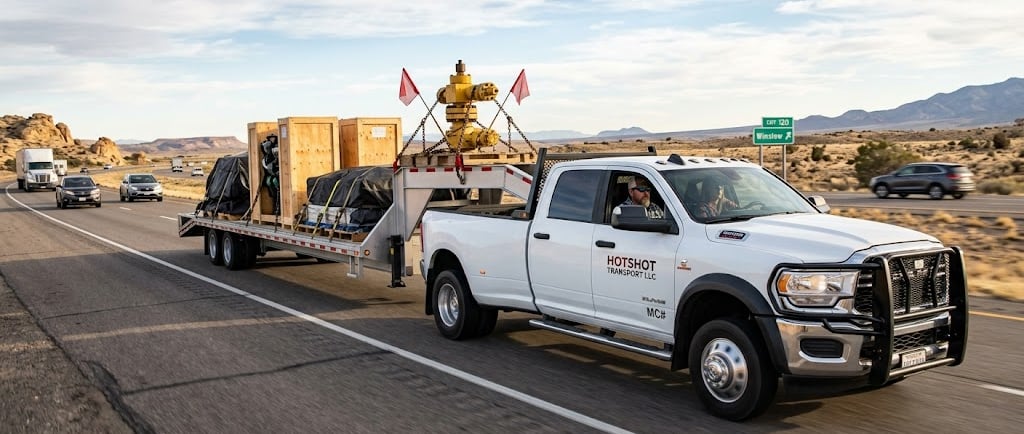
Hotshot Trucking in 2026: The Straight-Talk Guide for Owner-Operators
If you're reading this, you're either running hotshot already or seriously thinking about it. Either way, you don't need another article full of hype. You need the real picture — what hotshot trucking actually is, what it pays in today's market, what it takes to survive, and where the money quietly leaks out.
Let's get into it.
What Is Hotshot Trucking, Really?
Hotshot trucking is the business of moving time-sensitive, smaller loads that don't need a full semi. Instead of a Class 8 tractor-trailer, you run a medium-duty pickup — think Ram 3500, Ford F-350 through F-550, or a Chevy/GMC 3500-5500 — pulling a flatbed or gooseneck trailer.
The "hotshot" name comes from the urgency. A construction crew needs a part by morning. An oil field needs a component before the next shift or the whole rig sits idle. A factory needs materials or the line shuts down. Big carriers can't turn on a dime for a single small load — so hotshot operators fill that gap and get paid for the speed.
The freight that keeps hotshot trucks moving is mostly oilfield and energy equipment, construction materials and machinery, agricultural parts, manufacturing components, and anything expedited. Notably, those are the same industries driving freight demand heading into 2026 — which is why hotshot keeps carving out its niche even as other segments get crowded.
Why So Many Owner-Operators Choose Hotshot
The honest answer: the barrier to entry is low. Getting into a Class 8 rig can run $150,000+. A hotshot setup — a solid used heavy-duty pickup and a gooseneck trailer — gets you on the road for a fraction of that, with lower insurance and the ability to start hauling in weeks, not months.
That's also why a lot of OTR owner-operators start in hotshot: it lets them build insurance history, learn to run a business, and understand freight before scaling up to a semi. Lower cost, faster start, flexible schedule. The appeal is real.
Equipment: Truck + Trailer
Your earning ceiling is basically set by your equipment, so this decision matters.
The truck. The three workhorses are the Ram 3500 (Cummins diesel — the most common hotshot truck on the road), the Ford Super Duty line (Power Stroke — highest tow capacity and the biggest service network for when you break down far from home), and the Chevy/GMC Duramax (capable and often the best value used). All three regularly run 300,000+ miles with proper maintenance.
The trailer. A 40-foot gooseneck is the most popular and versatile choice — it handles the widest range of freight and opens up the highest-paying loads. Smaller bumper-pull trailers limit you to lighter freight, which means more competition and lower rates. Put simply: more trailer, more money.
CDL or Non-CDL? The Rule That Trips People Up
Here's the one that catches new operators off guard. If your truck and trailer's combined GVWR exceeds 26,001 lbs, you need a Class A CDL — regardless of what you're actually hauling that day.
Non-CDL setup: Combined weight capped under 26,001 lbs (commonly a ~33 ft trailer). Cheaper and simpler to start, but you're limited on load weight.
CDL setup: A Class A CDL with a 40 ft gooseneck lets you haul heavier freight — and heavier freight is where the better rates live.
If you're serious about maximizing income, the CDL path pays for itself.
What Hotshot Actually Pays in 2026
Let's talk numbers — with the caveat that no national "average" tells your real story. Rates depend on lane, urgency, weight, and how hard you negotiate.
In 2026, hotshot rates generally run from about $1.00 to $4.00+ per mile, with the average landing near $1.50/mile. Here's the rough breakdown:
General, non-urgent freight: ~$1.25–$2.00/mile
Expedited / time-sensitive: ~$2.00–$3.00/mile
Oilfield, oversized, or specialized: ~$2.50–$4.00+/mile
Geography matters too. Northeast lanes (PA, NJ, NY) tend to pay more to cover tolls, congestion, and higher operating costs, while low-density rural lanes pay less and come with longer deadhead. And it's seasonal — construction season from roughly March through June pushes rates up, winter cools them off.
The honest truth about the market: hotshot in 2026 isn't the gold rush it was in 2021–2022. Rates have come down, there are more trucks chasing freight in a lot of lanes, and taking partial loads has become part of the game. The operators who thrive aren't lucky — they know their cost per mile cold, stay disciplined on rates, and refuse to haul freight that loses money.
Is Hotshot Trucking Profitable?
It can be — but only if you run it like a business, not a joyride. Most operators need to clear at least $1.50/mile just to cover costs and earn a livable margin, since typical cost per mile lands somewhere around $1.00–$1.50. The operators pulling solid net income share the same habits: they track every expense, negotiate every load, keep deadhead low, and build direct broker and shipper relationships so they're not living at the bottom of the load board.
Which brings us to the part nobody warns you about.
The Silent Profit Killer: Empty Miles and Load Hunting
Here's where most hotshot operators quietly bleed money — not on fuel, not on maintenance, but on deadhead miles and dead time. Every hour you spend scrolling load boards is an hour you're not earning. Every empty mile between loads is pure loss. And every load you take too cheap because you "needed something" chips away at the year.
You can't out-drive a bad booking strategy. The truckers who win are the ones whose next load is already lined up before they drop the current one — at a rate that actually pays.
That's a full-time job on its own. And it's exactly the job you shouldn't be doing at a truck stop at midnight.
Where Five Star Dispatching Comes In
This is what we do. Five Star Dispatching runs the booking side of your hotshot operation so you can run the driving side.
We hunt the freight, negotiate the rate like it's our own paycheck, handle broker setups and paperwork, and keep your truck loaded across the markets that actually pay. Whether you're running a non-CDL bumper-pull or a 40-foot gooseneck behind a Class A, we work your lanes and skip the cheap freight that isn't worth your fuel. You keep your authority. You keep the final say on every load. We just make sure the phone's already ringing with the next good one.
For a hotshot operator, that's the difference between a truck that runs and a truck that earns.
The Bottom Line
Hotshot trucking in 2026 is still one of the most accessible ways into freight — lower startup, faster launch, steady demand in energy, construction, and manufacturing. But accessible doesn't mean easy. The winners know their numbers, protect their rates, and keep those wheels loaded. Nail those three, and hotshot pays.
Want to spend less time hunting loads and more time hauling them? 👉 Visit fivestardispatching.com and let's keep your hotshot truck loaded.
Frequently Asked Questions
What is hotshot trucking?
Hotshot trucking is hauling smaller, time-sensitive loads with a medium-duty pickup (Class 3–5) and a flatbed or gooseneck trailer, instead of a full semi. It's common in oilfield, construction, agriculture, and expedited freight.
Do I need a CDL for hotshot trucking?
Not always. If your truck and trailer's combined GVWR stays under 26,001 lbs, you can run non-CDL. Cross that line and you need a Class A CDL — no matter the actual load weight. A CDL setup unlocks heavier, higher-paying freight.
How much do hotshot loads pay per mile in 2026?
Roughly $1.00–$4.00+ per mile, averaging around $1.50. General freight sits lower; expedited, oilfield, and oversized loads pay the most. Lane, urgency, and negotiation drive the final number.
Is hotshot trucking profitable?
Yes, for disciplined operators. You typically need to clear at least $1.50/mile to cover costs and profit. Success comes from knowing your cost per mile, negotiating hard, minimizing deadhead, and keeping the truck loaded.
What truck is best for hotshot trucking?
The Ram 3500 (Cummins), Ford Super Duty F-350–F-550 (Power Stroke), and Chevy/GMC Duramax are the top choices. Pair with a 40-foot gooseneck for the widest, best-paying freight range.
How can a dispatcher help my hotshot business?
A good dispatcher keeps you loaded, negotiates better rates, and handles paperwork so you're not hunting loads yourself. Five Star Dispatching books freight for hotshot owner-operators nationwide while you keep your authority and the final call.
Reach out anytime for reliable dispatch support.
Conect Now
Newesletter
© 2025. All rights reserved.

