
Flatbed Dispatch Service for Owner-Operators | Five Star
A flatbed dispatch service that knows securement, tarp pay, and oversized freight — not a generic load-forwarder. Keep your deck loaded at premium rates with Five Star.
FLATBED DISPATCH SERVICE
Five Star Dispatching
7/6/20264 min read
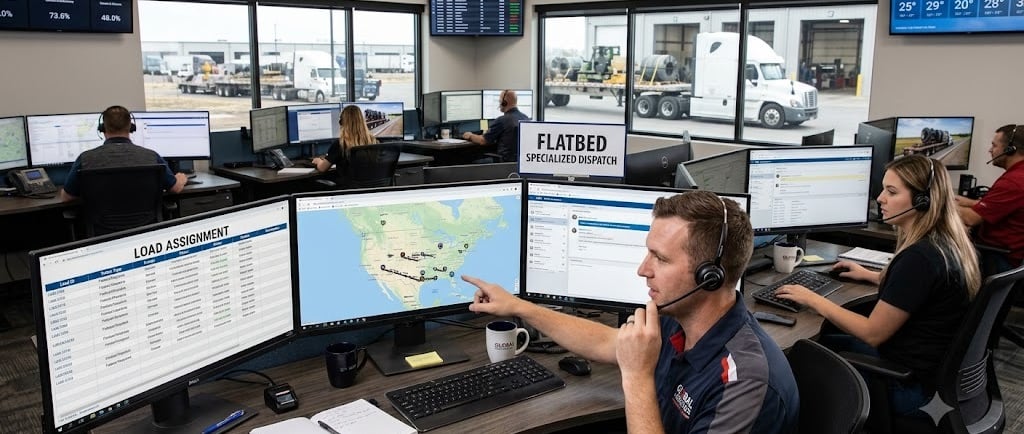
Flatbed Dispatch Service: Keep Your Deck Loaded and Paid What It's Worth
Flatbed isn't dry van. You already know that — you're the one throwing straps, tarping in the rain, and answering for a load of steel that has to arrive secured and on time. So here's the question that actually matters: why would you hand that specialized freight to a dispatcher who treats it like a box on wheels?
A real flatbed dispatch service understands open-deck work down to the chain binder. Most don't. That gap is exactly where your money goes missing — and it's the whole reason this page exists.
Why Flatbed Dispatch Is a Different Game
Dry van dispatching is simple: find a box, book a box. Flatbed is a different animal, and the dispatcher's job is harder — which is precisely why the payoff is bigger when it's done right.
Flatbed freight pays a premium over dry van for a reason. You're handling securement, tarping, and the responsibility of hauling steel, lumber, machinery, and oversized loads that simply can't ride in a trailer. That extra skill and effort is baked into the rate — but only if your dispatcher knows how to capture it. Flatbed freight also holds up when other segments soften, because it's tied to construction, manufacturing, energy, and agriculture — industries that keep building even when retail slows.
Translation: your equipment can out-earn a dry van all year long. The bottleneck is whether the person booking your loads actually knows flatbed.
What Flatbed Is Paying in 2026 (And Why Capacity Is on Your Side)
Here's the current picture, and it's a good one for flatbed operators. Through 2026, national flatbed spot rates have been running strong — well above dry van, with national averages climbing into the $3.00–$3.60/mile range in peak months, and regional highs (the Southeast especially) pushing even higher. Contract rates run higher still.
More importantly, capacity is tight. Flatbed load-to-truck ratios have been sitting far above dry van — meaning there's freight chasing your deck right now, not the other way around. Tight capacity equals leverage, and leverage is exactly what a sharp dispatcher turns into a higher rate on your rate confirmation.
The catch: flatbed is seasonal. Rates bottom out in the cold months (roughly January–February when construction slows), climb through spring, and peak in summer as lumber, steel, and building-material demand surges, with a second bump in the fall. A dispatcher who knows that calendar keeps you positioned in the right lanes at the right time instead of chasing scraps.
What a Real Flatbed Dispatcher Must Know
This is the part generic dispatchers get wrong. Booking flatbed well takes specialized knowledge, and here's the checklist your dispatcher should clear:
Tarp pay negotiated separately. Tarping is labor. It should never be quietly rolled into the linehaul as "tarp included." A flatbed dispatcher negotiates tarp pay on top of the rate — every time. Miss this on enough loads and you've given away thousands.
Securement and commodity know-how. Steel, coils, lumber, pipe, and machinery each secure differently and price differently. Your dispatcher should know what each commodity pays and what it takes to haul it legally.
Oversized and permit awareness. Oversized and specialized freight pays the most because fewer trucks can handle it. That means understanding permits, escorts, and routing — not booking you into a load you can't legally move.
Deadhead discipline. Empty miles quietly eat flatbed profit alive. A $3.00/mile load with 200 miles of deadhead pays less than a $2.70 load with 50 — and a good dispatcher does that math before you do, planning your next load before you're even unloaded.
Lane and market rates by region. Flatbed rates swing hard by region and season. Your dispatcher should know what your commodity pays in your lanes and refuse below-market freight on your behalf.
If a "flatbed dispatch service" can't speak to all five, it's a load-forwarder with a phone — and it's costing you.
Where Five Star Dispatching Comes In
This is what we do for flatbed owner-operators. Five Star Dispatching runs your booking side like the specialized work it is.
We hunt open-deck freight in the markets that pay, negotiate your rate — tarp pay included, separately — and refuse the cheap loads that aren't worth your straps. We plan around deadhead so your empty miles stay low, watch the seasonal swings so you're positioned before rates climb, and handle the broker setups and paperwork so your time goes to driving and securing, not scrolling. You keep your authority. You keep the final say on every load. We just make sure the next paying load is already lined up.
Whether you're running a standard flatbed, step-deck, or hauling the heavy specialized stuff, we treat your deck like it's earning our paycheck too — because it is.
The Bottom Line
Flatbed is one of the strongest, best-paying segments on the road right now, with tight capacity handing operators real leverage. But that premium only lands in your pocket if the person booking your loads actually understands open-deck freight. Don't give specialized work to a generic dispatcher. Run with a flatbed dispatch service that knows the difference.
Ready to keep your deck loaded at rates that reflect the work? 👉 Visit fivestardispatching.com and let's get your flatbed earning.
Frequently Asked Questions
What does a flatbed dispatch service do?
A flatbed dispatch service finds and books open-deck loads, negotiates your rate (including separate tarp pay), handles broker setups and paperwork, and minimizes deadhead — all while you keep your authority and the final say on loads.
Why do I need a flatbed-specific dispatcher instead of a general one?
Flatbed involves securement, tarping, permits, and commodity-specific pricing that generic dispatchers routinely miss. A flatbed specialist captures the premium your equipment earns instead of leaving it on the table.
How much does flatbed pay per mile in 2026?
Flatbed has been running strong in 2026 — national spot averages have climbed into roughly the $3.00–$3.60/mile range in peak months, well above dry van, with contract rates higher and regional highs in the Southeast. Your actual rate depends on lane, commodity, season, and negotiation.
Should tarp pay be included in the rate?
No. Tarping is extra labor and should be negotiated separately, on top of the linehaul rate. A good flatbed dispatcher never accepts "tarp included" without adding the premium.
Do you dispatch step-deck and oversized loads?
Yes. Five Star Dispatching books standard flatbed, step-deck, and specialized/oversized freight for owner-operators and small fleets nationwide.
Reach out anytime for reliable dispatch support.
Conect Now
Newesletter
© 2025. All rights reserved.

