
How to Find the Best Loads as an Owner-Operator (2026)
Learn how to find the best loads as an owner-operator — know your cost per mile, work the boards, build broker relationships, kill deadhead, and negotiate every rate.
TRUCKING INDUSTRY
Five Star Dispatching
7/9/20265 min read
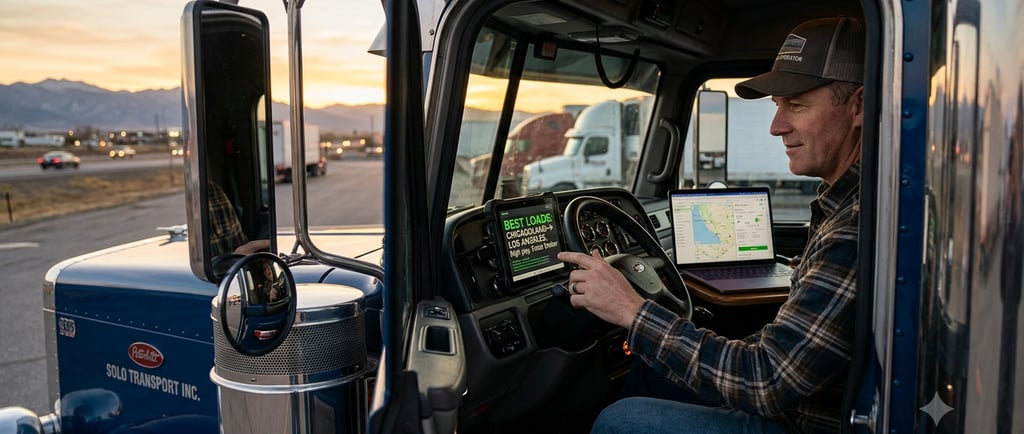

How to Find the Best Loads as an Owner-Operator (Without Living on the Load Board)
Every owner-operator wants "the best loads." But here's the first thing that separates the drivers who net six figures from the ones grinding paycheck to paycheck: they don't chase the highest rate. They chase the highest net.
A $3.00/mile load with 200 miles of deadhead and three hours of detention can lose to a $2.40/mile load that's loaded and rolling right where you sit. "Best" isn't a number on a load board — it's what actually lands in your pocket after fuel, miles, and time. Get that straight and the rest of this guide will make you money.
Here's exactly how the pros find the best loads.
1. Know Your Cost Per Mile — Or You're Guessing
You cannot judge a load if you don't know what a mile costs you. Add up every expense — fuel, truck payment, insurance, maintenance, tires, permits, tolls, food, your own pay — and divide by the miles you run. Most owner-operators land somewhere around $1.50–$2.00 per mile all-in.
That number is your line in the sand. Any load below it loses money, no matter how "good" it looks. Any load above it is a candidate. Without this figure, you're not negotiating — you're gambling. Print it. Tape it to your dash.
2. Work the Load Boards — But Don't Live There
Load boards like DAT and Truckstop are where most owner-operators start, and they're useful for seeing market rates, filling gaps, and finding freight in unfamiliar lanes. Newer AI-powered tools can even surface high-RPM loads and flag below-market rates for you.
But here's the trap: the load board is the most competitive, lowest-margin place to find freight. Everybody's on it, brokers know it, and posted rates reflect that race to the bottom. Use the boards as a thermometer and a backup — not as your whole strategy. The best loads usually aren't posted there at all.
3. Build Direct Broker and Shipper Relationships (This Is Where the Money Is)
The highest-paying, most consistent freight lives off the board — in relationships. Brokers hand their best loads to carriers they trust before posting the scraps publicly. Shippers who know you'll show up on time will call you first and pay a premium for reliability.
Build this deliberately: deliver clean and on time, be easy to reach, follow up after good loads, and ask brokers to keep you in mind for your lanes. Ten solid broker relationships will out-earn a thousand cold load-board bids. This is slow to build and worth every hour.
4. Negotiate Every Single Rate
The posted rate is an opening offer, not a final one. Brokers pad rates expecting you to push back — and the drivers who don't push are leaving money on every load.
Know the market rate for your lane before you call (the boards give you this). Then counter with confidence: reference your costs, the deadhead, the tarping, the reload situation. Even $0.15–$0.25/mile more per load adds up to thousands a year. If a broker won't move and the number loses you money, walk. There's always another load.
5. Kill Deadhead — It's the Silent Profit Killer
Empty miles are pure loss: you're burning fuel and hours with zero revenue. The best owner-operators plan freight in pairs — a loaded run out and a loaded backhaul home — instead of booking one great load and deadheading 200 miles to the next.
Before you take a load, ask: what's the freight situation where this drops me? A slightly lower rate into a hot freight market beats a great rate into a dead zone you'll deadhead out of. Think in round trips, not single legs.
6. Specialize Where the Competition Thins Out
General dry van freight is the most crowded, lowest-paying corner of the market. Step into specialized freight and the competition drops while the rates climb: reefer, flatbed, oversized, hotshot, hazmat, and power-only all pay premiums because fewer trucks can (or will) haul them.
Pick a niche that fits your equipment and get known for it. Specialized carriers spend less time hunting and more time picking — because the freight comes looking for them.
7. Time the Market — Freight Has a Rhythm
The best loads show up at predictable times, and smart operators position for them:
Seasonally, produce season, construction season (spring–summer), and the Q4 retail push all tighten capacity and lift rates. Cold-weather months slow down.
Weekly, rates often firm up late in the week as brokers scramble to cover Friday and weekend freight.
Directionally, some lanes pay more one way than the other — learn which direction pays in your regular lanes and structure your week around it.
Positioning your truck before the surge beats chasing it after.
8. Watch for the Traps
Not every "great" load is great. Protect yourself:
Check broker credit before hauling — a high rate means nothing if they don't pay. Watch days-to-pay and credit scores.
Beware double brokering — if something feels off about who actually controls the load, dig before you roll.
Don't fall for cheap-freight guilt. "Just take it to keep moving" is how owner-operators quietly go broke. An empty truck costs less than a money-losing load.
The Honest Catch
Do all eight of these well, every day, and you'll find the best loads. But read that list again — that's a full-time job. Knowing your numbers, working the boards, nurturing broker relationships, negotiating every rate, planning backhauls, timing the market, vetting brokers… all while you're driving 500 miles and managing hours of service.
That's the real reason so many owner-operators leave money on the table. Not because they don't know how — because there aren't enough hours to drive and do all this at a high level. You can't book like a pro from behind the wheel at 70 mph.
How Five Star Dispatching Does This For You
This is the entire job of a good dispatcher — and it's ours. Five Star Dispatching runs all eight of these plays for you: we know the market rates, work the boards and our broker network, negotiate every load, plan around deadhead, position you for the seasonal surges, and vet the brokers before you roll. You keep your authority and the final say on every load. We just make sure the best-paying freight is already lined up while you focus on the road.
For an owner-operator, that's the difference between finding the occasional good load and running good loads all week long.
The Bottom Line
Finding the best loads as an owner-operator comes down to knowing your costs, working relationships harder than load boards, negotiating relentlessly, and refusing freight that loses money. Master those and you'll out-earn most of the market. Or hand the whole playbook to a dispatcher who runs it full-time — and get your driving hours back.
Want the best loads without the load-board grind? 👉 Visit fivestardispatching.com and let's keep your truck on high-paying freight.
Frequently Asked Questions
How do owner-operators find the best-paying loads?
By knowing their cost per mile, using load boards as a backup rather than a crutch, building direct broker and shipper relationships (where the best freight lives), negotiating every rate, minimizing deadhead, and specializing in higher-paying niche freight.
What's the best load board for owner-operators?
DAT and Truckstop are the most established, and newer AI-powered tools can flag high-paying loads. But the boards are the most competitive, lowest-margin place to find freight — the best loads usually come from broker relationships off the board.
How do I know if a load is actually worth taking?
Compare the rate to your cost per mile after factoring in deadhead, detention, and where it drops you. A high rate into a dead freight market can net less than a modest rate that keeps you loaded and rolling.
Should I use a dispatcher to find loads?
If you'd rather drive than spend hours booking, yes. A dispatcher works the boards, broker network, negotiations, and backhaul planning full-time — landing better freight than most owner-operators can while driving. You keep your authority and the final say.
How do I avoid cheap freight?
Know your cost per mile, refuse anything below it, and resist "take it to keep moving" pressure. An empty truck costs less than a load that loses money — hold your rate and wait for freight that pays.
Reach out anytime for reliable dispatch support.
Conect Now
Newesletter
© 2025. All rights reserved.

