
Freight Dispatcher vs. Trucking Dispatcher: The Difference
What's the difference between a freight dispatcher and a trucking dispatcher? Essentially nothing — they're the same role. Here are the distinctions that actually matter.
TRUCKING INDUSTRY
Five Star Dispatching
7/10/20264 min read
Freight Dispatcher vs. Trucking Dispatcher: What's the Real Difference?
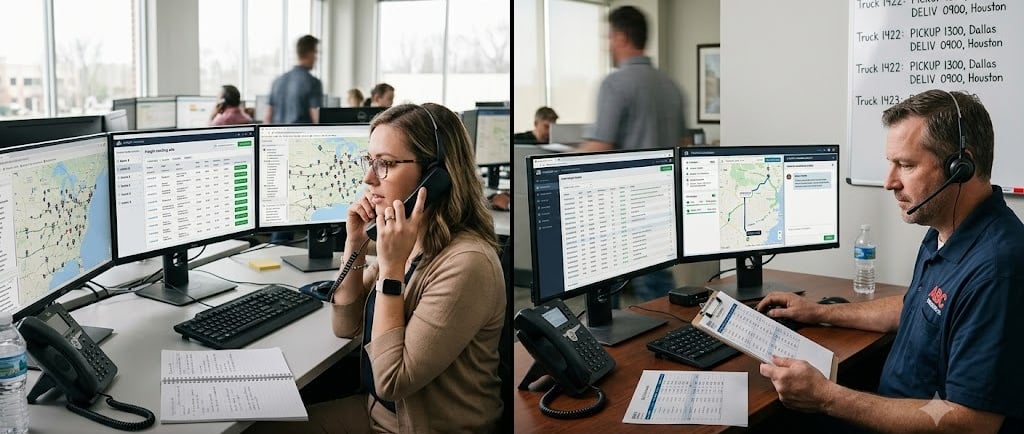
Short answer: almost nothing. "Freight dispatcher" and "trucking dispatcher" describe the same job — finding loads, negotiating rates, and keeping a carrier's trucks moving. The industry uses the terms interchangeably, and anyone telling you there's a hard line between them is usually padding an article.
But the fact that you're asking means there's real confusion here worth clearing up — because while these two labels mean the same thing, there are distinctions in the dispatching world that matter a lot. Let's sort out what's genuinely different from what's just wording.
Why the Two Terms Basically Mean the Same Thing
Both a freight dispatcher and a trucking dispatcher do the identical core work: they connect trucks to freight. They search load boards, tap broker relationships, negotiate rates, book loads, handle the paperwork, and keep a carrier or owner-operator loaded and rolling.
If there's any shade of difference, it's only in connotation:
"Trucking dispatcher" (or truck dispatcher) leans toward the trucking-specific context — someone focused on trucks and the carriers that run them.
"Freight dispatcher" can sound slightly broader, emphasizing the freight itself rather than the equipment.
In day-to-day reality, they're the same person doing the same thing. Job postings, dispatch services, and owner-operators use both terms for the exact same role. So don't get hung up on the label — get clear on what the person behind it actually does.
What a Dispatcher (Freight or Trucking) Actually Does
Whichever term you use, a good dispatcher's job is the same:
Finds loads across load boards and a broker network that fit your equipment and lanes.
Negotiates rates so you're not hauling cheap freight or leaving money on the table.
Books the freight and handles carrier packets, broker setups, and rate confirmations.
Plans your routes to minimize deadhead and keep you loaded on the way back, not just out.
Handles the back office — check calls, paperwork, and problem-solving when a load goes sideways.
That's the role. The name on it doesn't change the work.
The Distinctions That Do Matter
Here's where the real differences live — and these are the ones you should actually care about when choosing who dispatches your truck.
1. Independent Dispatch Service vs. In-House Company Dispatcher
This is the distinction people think they're asking about.
An in-house (company) dispatcher is an employee of one trucking company. They manage that company's own fleet and drivers, assigning loads the company has already secured. They work for the company — not for you.
An independent dispatch service works for the owner-operator or small carrier. They find loads across many brokers, negotiate on your behalf, and you keep your own authority. You're the client, not the employee.
If you're an owner-operator, this is the difference that matters — you want someone working for your bottom line, not a fleet's.
2. Dispatcher vs. Freight Broker (Don't Confuse These)
This one trips up a lot of new operators, and it's the genuinely important distinction:
A freight broker is licensed by the FMCSA, works on behalf of the shipper, and arranges transportation by connecting shippers to carriers. They're a middleman between the freight and the truck.
A dispatcher works on behalf of the carrier (you). They represent your interests, negotiate against brokers for better rates, and manage your operation. A dispatcher doesn't need a broker license because they're your agent, not the shipper's.
Same freight, opposite sides of the table. Your dispatcher should be fighting brokers for your rate — not acting like one.
What to Look For — Regardless of the Label
Forget whether they're called a "freight dispatcher" or a "trucking dispatcher." Ask what actually determines whether they make you money:
Do they work for you, and do you keep your own authority?
What's their average rate per mile in your lanes?
Do you get one dedicated person, or a rotating call center?
How do they charge — flat fee or percentage?
Do they specialize in your equipment and freight type?
Those answers tell you far more than the title ever will.
Where Five Star Dispatching Fits
Call us a freight dispatcher, a trucking dispatcher, a truck dispatcher — the name doesn't matter, because the work is what counts. Five Star Dispatching is an independent dispatch service that works for you, the owner-operator. We find your loads, negotiate your rates, handle the paperwork, and keep your truck loaded across dry van, reefer, flatbed, power-only, and hotshot — while you keep your authority and the final say on every load.
We sit on your side of the table, negotiating against the brokers for your rate. That's the only distinction that actually pays.
The Bottom Line
Freight dispatcher and trucking dispatcher are two names for the same job — connecting trucks to freight and keeping carriers loaded. The differences that actually matter aren't in the label; they're in who the dispatcher works for (you or a fleet) and which side of the table they sit on (carrier or broker). Get those right and the title is just semantics.
Want a dispatcher who works for you — whatever you call them? 👉 Visit fivestardispatching.com and let's keep your truck loaded.
Frequently Asked Questions
Is there a difference between a freight dispatcher and a trucking dispatcher?
Not really. The terms are used interchangeably for the same role — finding loads, negotiating rates, and keeping a carrier's trucks moving. Any difference is in connotation, not function.
What's the difference between a dispatcher and a freight broker?
A freight broker is FMCSA-licensed and works for the shipper, arranging transport. A dispatcher works for the carrier (you), representing your interests and negotiating against brokers for better rates. Opposite sides of the same deal.
Does a truck dispatcher need a license?
No. Because a dispatcher works as the carrier's agent rather than the shipper's, they don't need the broker authority a freight broker requires. They represent you.
What's the difference between an independent dispatch service and a company dispatcher?
A company (in-house) dispatcher is an employee managing one fleet's own trucks. An independent dispatch service works for owner-operators and small carriers, finding loads across many brokers while you keep your own authority.
Which does Five Star Dispatching provide?
An independent dispatch service that works for you. We find and book your loads, negotiate your rates, and handle paperwork while you keep your authority and the final say on every load.
Reach out anytime for reliable dispatch support.
Conect Now
Newesletter
© 2025. All rights reserved.

