
What Good Dispatchers Do That Load Boards Never Will
A load board gives you a list. A good dispatcher does everything after that list — the negotiation, the relationships, the planning. Here's exactly what that gap looks like in practice.
TRUCK DISPATCHER
Five Star Dispatching
7/22/20264 min read
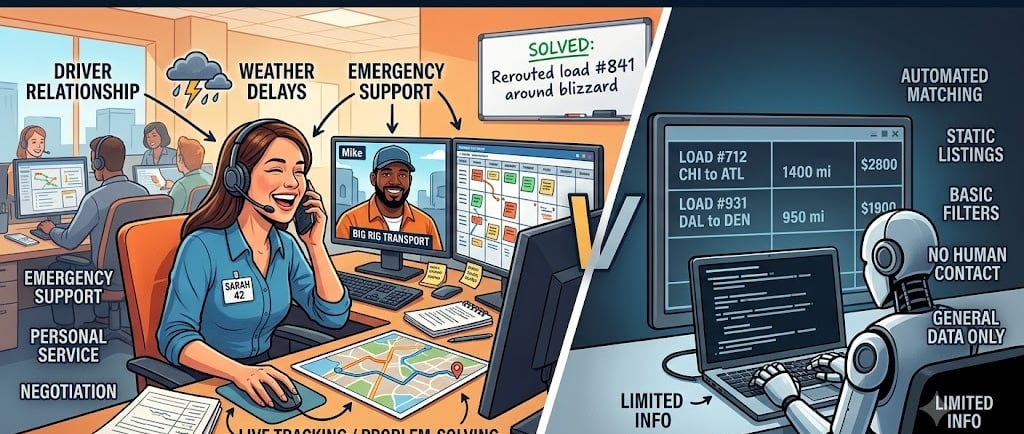
Load boards are useful. Nobody's arguing otherwise — DAT, Truckstop, and the rest give carriers access to freight they'd never see on their own. But a load board is a tool, not a strategy. It shows you what's posted; it doesn't get you a better rate, tell you which broker actually pays on time, or plan your next three loads so you're not sitting empty on a Tuesday afternoon.
That gap — between having access to freight and actually maximizing what you earn from it — is exactly where a good dispatcher operates. Here's what that looks like in practice.
Load Boards Show You Everyone Else's Freight — Dispatchers Get You Freight Nobody Else Sees
A meaningful share of the best-paying loads never hit a public board at all. They move through direct relationships between dispatchers and shippers or brokers who prefer working with carriers they already trust. A load board can't build that kind of relationship — only consistent, reliable communication over time can, and that's exactly what a good dispatcher is doing in the background every single week.
Load Boards List a Rate — Dispatchers Negotiate It
Every load posted on a board comes with an asking rate, and that rate is almost always negotiable. A load board has no opinion on whether that number is fair for your lane and equipment — it just displays it. A dispatcher who's actively working freight every day knows current market rates and pushes back on lowball offers instead of accepting the first number, which is one of the single biggest levers for increasing weekly revenue.
Load Boards Don't Vet Anyone — Dispatchers Check Every Broker
Anyone can post a load to most boards. There's no built-in guarantee that the broker posting it pays on time, pays in full, or pays at all. A dispatcher checks broker credit scores and payment history before booking, which protects you from the kind of load that leaves you chasing an invoice for weeks. This single function alone can save a carrier from a genuinely bad financial hit.
Load Boards Show One Load at a Time — Dispatchers Plan Three Moves Ahead
Scrolling a board gets you your next load. It doesn't tell you what happens after that delivery, or whether you're about to deadhead 200 miles to reach your next pickup. A good dispatcher is already lining up your next load before your current one is delivered, sequencing freight so you're not backtracking or burning fuel on empty miles.
Load Boards Don't Handle the Paperwork — Dispatchers Do
Rate confirmations, check calls, invoicing — a load board's job ends the moment you accept a load. Everything after that is on you, unless a dispatcher is handling it. That's hours a week most solo operators would rather spend driving or resting.
Load Boards Treat Every Carrier the Same — Dispatchers Know Your Business
A load board doesn't know your preferred lanes, your home time needs, your equipment specs, or your minimum acceptable rate. It shows the same list to everyone. A dispatcher who's worked with you for a while filters freight specifically around what actually works for your business — not just what's available.
So Should You Ditch Load Boards Entirely?
No — load boards and dispatchers aren't competing tools, they work together. A good dispatcher is actively using load boards as one of several sources for freight, layered on top of broker relationships and direct shipper contacts. The board gives visibility into available freight; the dispatcher is what turns that visibility into actual, well-negotiated, consistent bookings.
The Real Test
If you've been running your own loads off a board and wondering whether a dispatcher would actually make a difference, ask yourself: are you negotiating every single rate, checking every broker's payment history, and planning your next three loads before your current delivery? If the honest answer is no — not because you're bad at the job, but because there simply aren't enough hours in the day — that's the gap a good dispatcher fills.
Frequently Asked Questions
Do dispatchers use the same load boards I have access to?
Yes, typically — DAT, Truckstop, and similar platforms — but they combine that with broker relationships and direct shipper contacts a solo carrier usually doesn't have time to build.
Can I use a load board and a dispatcher at the same time?
Absolutely. Many carriers keep their own load board access while a dispatcher handles negotiation, planning, and paperwork — it's not an either/or situation.
Why do some loads never appear on public load boards?
Shippers and brokers often prefer working directly with carriers or dispatchers they already have a relationship with, which means some freight is booked before it's ever publicly posted.
Is broker vetting really necessary if a load board already shows ratings?
Public ratings on load boards can be limited or outdated. A dispatcher actively checking payment history and credit scores provides a more current, reliable picture before you commit to a load.
Want the Part Load Boards Can't Give You?
Five Star Dispatching combines active load board searches with real broker relationships, rate negotiation, and route planning — the parts of the job a board alone will never handle.
Get in touch with our team today and see the difference it makes to have someone working the angles you don't have time for.
Related reading: What Does a Truck Dispatcher Actually Do? | Is Paying an 8% Dispatch Fee Actually Worth It?
External resources: FMCSA Owner-Operator Resources | DAT Freight & Analytics
Reach out anytime for reliable dispatch support.
Conect Now
Newesletter
© 2025. All rights reserved.

